We have 4277 guests and 4 members online
Home > Articles > Columns > Articles > Feature Injection - Part 3

Feature Injection - Part 3

E-mail
Written by Chris Matts   
Monday, 11 May 2009 00:00
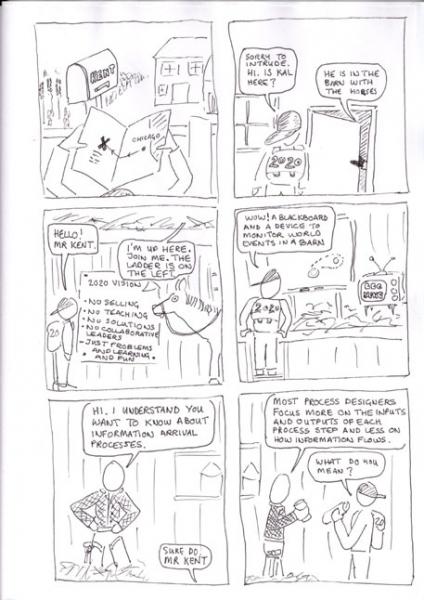
jun-09-comic So we've fixed the process, and we've identified the value. Now, how do
we identify the minimum set of features to deliver that value?


cm0509-1


cm0509-2

cm0509-3

cm0509-4

cm0509-5

cm0509-6

Comments (3)Add Comment

Chris Matts
...
written by Chris Matts, July 01, 2009
Hi Mike

Sorry for the delay replying to you.

The difference between "injection" and "push" is really that the features are injected in order to deliver the value. i.e. The value determines the features and not an expert user who tells you what is needed. When someone tells you the features ( especially on the inputs ), they are "pushing" features into the application. The features are dependent on the value sought, not what a user says.

I've been doing analysis this way for a few years so I can say it works with Waterfall, Agile or otherwise. Its just taken me several years to work out what I actually do. So yes, this is not only for Kanban. I like the sound of Sally's Snazzy Agile Process.

Chris
Sebastien Plisson
...
written by Sebastien Plisson, June 13, 2009
Very inspiring serie, feature injection seems to be the right path to lean software development. Can't wait to read the next article ! Getting ready to share and apply it as soon as possible, your comics are a great way to explain the process.
Mike Bria
...
written by Mike Bria, May 16, 2009
Chris,

I'm digging this format, very cool.

I'm a bit confused about the comparison to XP at the start. What is the difference between "pushing a feature in" and "injected a feature in"? The idea that the feature is a bi-product of "pulling" something of value?

If so, I wouldn't quite agree that this is purely a Kanban thing- really, this a matter of establishing stories (features) that bring value, whether XP, Kanban, or Sally's Snazzy Agile Process. Isn't it?

Cheers,
MB

Write comment

You must be logged in to post a comment. Please register if you do not have an account yet.

busy
Last Updated on Tuesday, 23 June 2009 17:06
 

Agile Marketplace - Announcements and Special Offers

Webcast:  Moving Build and Code Quality Upstream
This interactive panel discussion moderated by Bob Aiello, Editor-in-Chief fo the CM Journal brings industry experts Anders Wallgren, CTO of Electric Cloud and Gwyn Fisher, CTO of Klocwork together for a candid discussion of the cost savings, productivity and quality benefits that can be achieved by stabilizing builds and code quality as early in the development cycle as possible.
Register Now!

Collabnet -TeamForge 5.3
CollabNet TeamForge 5.3 includes Dynamic Planning—providing flexibility to model release scope and timeline in a single view. Now, you can easily manipulate/adjust release data.
Download Your Free Trial

Requirements-based testing (RBT) can help to ensure comprehensive test coverage, reducing the risk of failure and improving software quality. This white paper details how application lifecycle management can be used to more effectively implement RBT processes, offering greater collaboration, traceability and control.can help you increase efficiency, reduce project risk, and improve overall software quality. Learn how MKS Integrity for application lifecycle management enables RBT, delivering full lifecycle traceability to help ensure that project requirements have complete test planning and execution coverage.
Download the Requirements-Based Testing whitepaper

PureCM –SCM for Agile Teams
PureCM helps you to manage development in short iterations: keeping track of changes, supporting automated builds and preserving frequent snapshots of your projects.
Get the free trial now